
Finding Durham Residents by Record
Durham has no single official roll of every person who lives here. Start with what is already known. A current property question belongs with Tax Administration. A registration question belongs with the State Board of Elections. A recorded transfer belongs with the Register of Deeds. A past household may appear in a Durham directory, newspaper, or library collection. Each source labels a person differently: owner, voter, party to an instrument, applicant, or historical householder. Those roles should stay separate.
A Durham residents directory search works best when it moves from a narrow, authoritative result to a second record with a different purpose. A parcel card can point to a deed reference. A dated directory can point to a street section. Court and vital records have their own access rules. Postal city names can cross a city or county line, so a Durham mailing address alone is not enough to settle jurisdiction.
- Choose the Durham source that matches the question: a property portal for a parcel, a voter lookup for registration, or a library directory for a past address.
- Save the date, custodian, and search field used. For a parcel, save the REID or PIN before following a displayed owner name.
- Use the Register of Deeds to compare a deed reference with the tax display when legal parties or a legal description matter.
- Check a second independent Durham record, especially for a common name, an old street spelling, or a postal-area boundary.
- Ask the custodian for an existing record when the online route does not carry the needed series or certified copy.
Note: A directory listing, tax display, or registration record has its own date and purpose, so none is a universal statement of current residence.
Durham Residents Records Offices
Durham County offices divide the work. The Register of Deeds keeps recorded land instruments, plats, assumed names, and local vital-record services. Tax Administration maintains the parcel-centered tax display. The Board of Elections and the State Board handle voter records. The Clerk of Superior Court holds court and estate materials. The City Clerk keeps municipal archives and cemetery deeds, rather than county deeds or certificates. Matching the question to the office avoids a long search in the wrong system.
The Durham County Register of Deeds is at 201 E. Main Street in Administration Building II and lists general hours of 8:30 a.m. to 5 p.m. The county’s tax and mapping contacts are in the same building, while Durham Elections has its own public-information route. The cards below are starting points, not substitutes for the custodian when a copy must be certified.
Durham County Register of Deeds
201 E. Main Street, Administration Building II
Durham, NC 27701
919-560-0480
Durham Tax Administration
201 E. Main Street, third floor
Durham, NC 27701
919-560-0300
Durham County Board of Elections
3825 S. Roxboro Street, Suite 101
Durham, NC 27713
919-560-0700
Durham’s City Clerk office provides a municipal route for Council actions, archives, contracts, and cemetery deeds. It should not be used as a deed or certificate search.
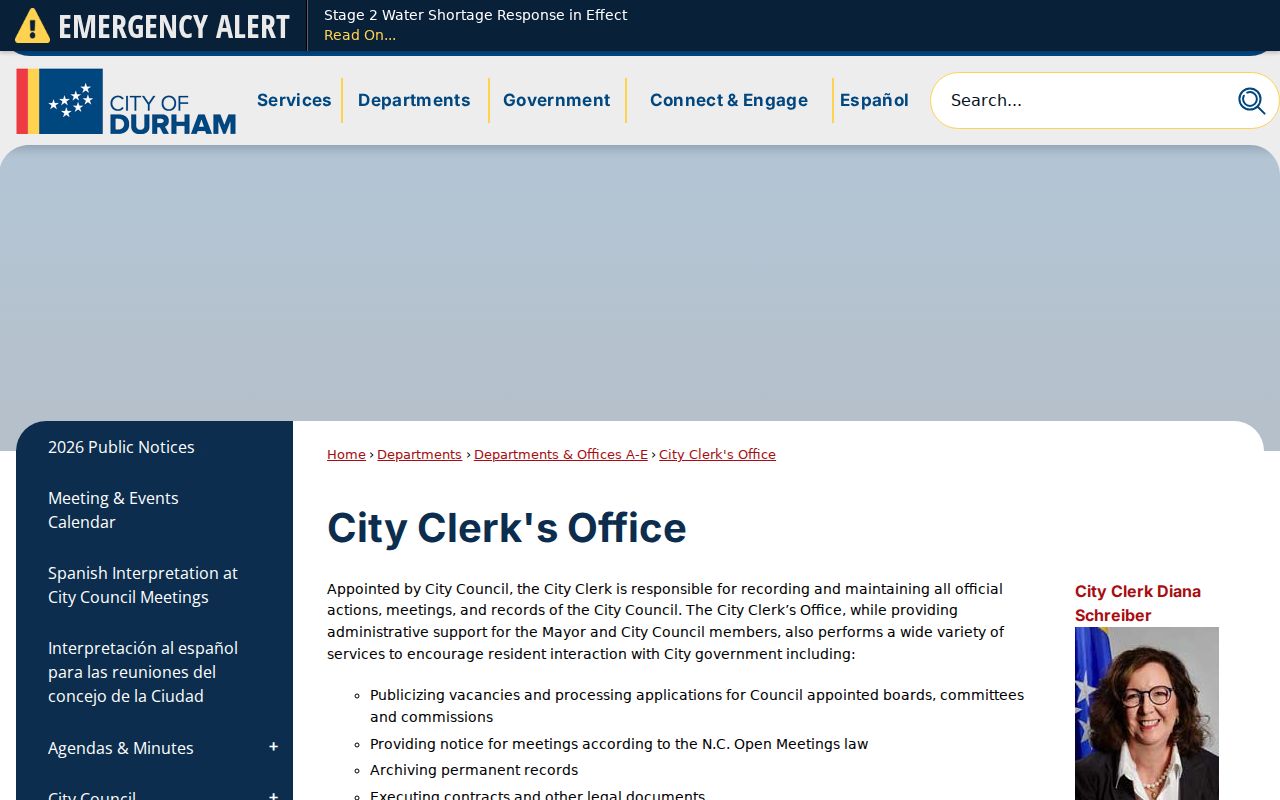
Municipal archives can add civic or cemetery context, while Durham County offices remain the custodians for property, recorded deeds, and local vital-record services.
Durham Register of Deeds information shows the office route for recorded instruments and local certificate services.
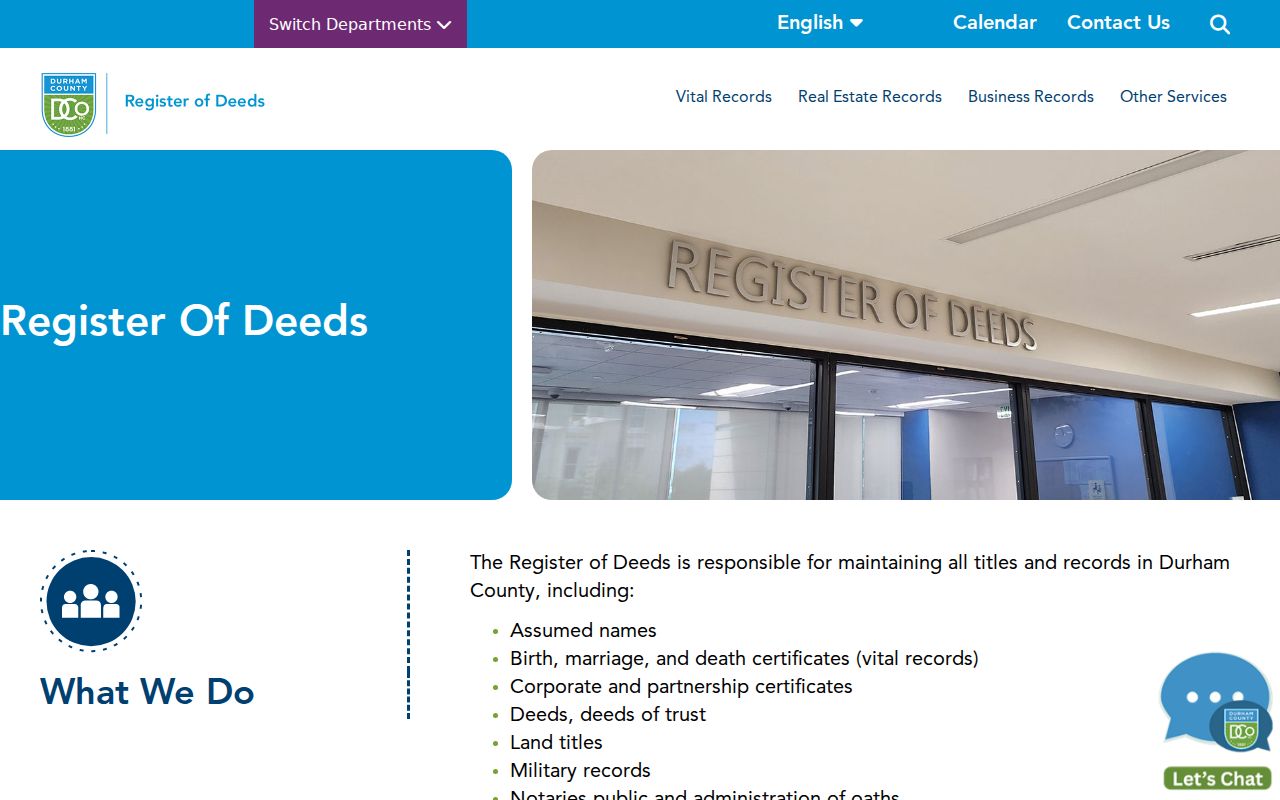
The office is the practical fallback when a historical index, certified copy, or excluded recorded series is not available through a public browser.
Durham Property Roll Search
Tax Administration’s Detailed Property Information is Durham’s main parcel entry point. It searches by owner or business name, street, REID, or PIN. The street tab can be used for a group of parcels, while a REID or PIN is a better key for returning to one parcel. The resulting card can show a location address, owner mailing address, deed and plat references, acreage, planning fields, permits, sales, and values. It remains a tax record, not an occupant list.
| Durham search tab | Required field | How to enter it |
|---|---|---|
| Owner/Business Name | Owner/Business Name | Last, first; a partial last name; or a business name |
| Street | Neither field required | Street number is optional; omit direction and street type from Street Name |
| REID | REID | Use the parcel’s tax identifier |
| PIN | PIN | Use the 10-digit parcel ID, or 13 digits for a condominium |
Owner mailing and location fields can differ. Durham’s land-record guidance says tax ownership updates can follow some life events without changing the recorded deed name. Deeded acreage may also differ from GIS-calculated acreage. Compare a tax card with the deed when title, legal description, or a transfer date matters.
Durham’s property-search screen shows the four separate routes into the parcel system.
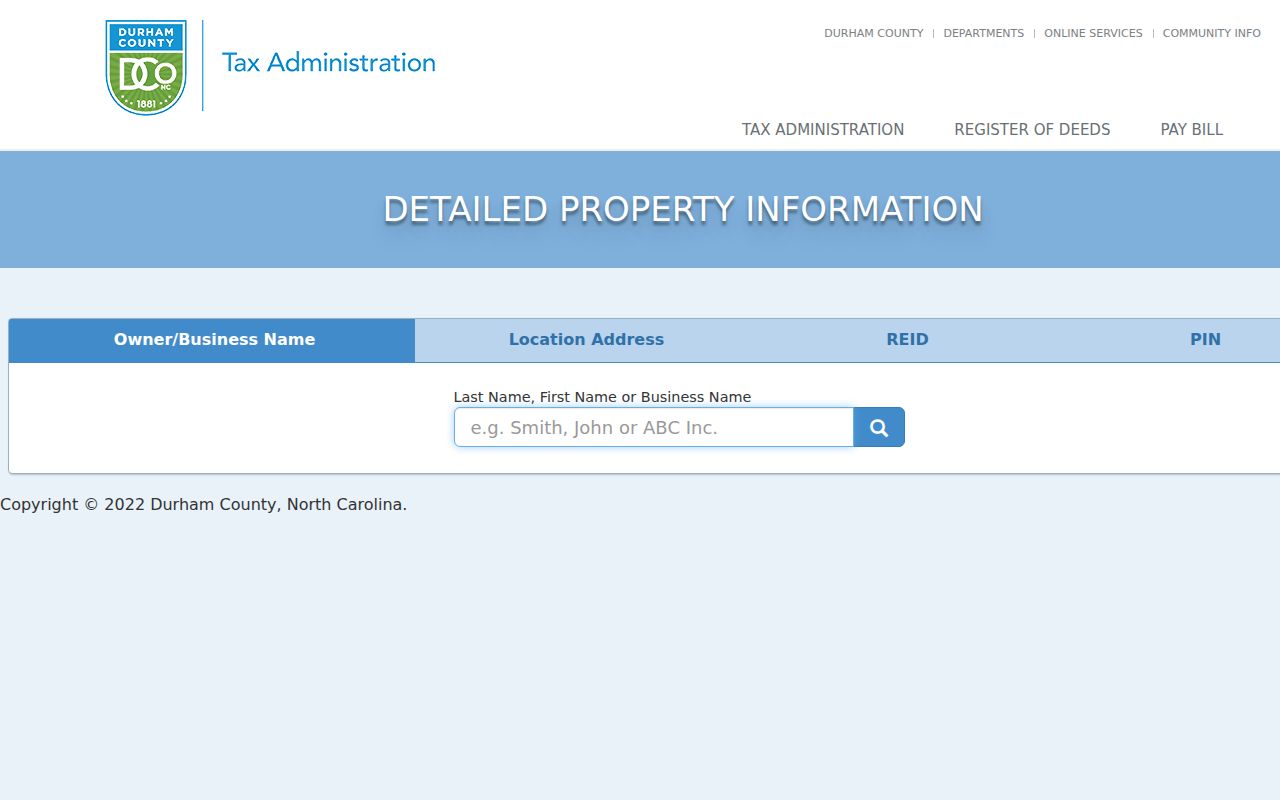
The distinct tabs keep a Durham street search separate from a name search and preserve the parcel key for later deed or map work.
Durham Voter Records by County
North Carolina’s voter search uses first name, last name, year of birth, county, and voter status. Middle initial is optional. Status choices include Registered and Removed or Denied, with at least one selected. A Durham match can help distinguish people with the same name and can show registration-related details such as jurisdictions, polling place, sample ballot when available, absentee information, and voter history. It does not settle current physical occupancy.
Most voter-registration information is public under G.S. 163-82.10, but public display excludes full birth dates, Social Security numbers, driver-license numbers, and the agency of registration. Durham Elections publishes request and export categories, including voter history from 1985, but a by-municipality or by-street lead still needs careful time and role labels. A missing result may reflect maintenance, a move, status change, or a protected record.
Current Durham Resident Directories
Current Durham directory-like sources each answer a narrow question. Tax data can identify the owner shown for a parcel. The voter system can establish a registration record with protected fields removed. The deed index identifies parties to recorded instruments. LDO can identify a permit application or inspection trail after its public coverage start. None is a master list of Durham households, and each must be read with its date and role in mind.
| Durham source | Record role | Custodian | Practical access |
|---|---|---|---|
| Tax parcel card | Owner display, mailing and situs fields | Tax Administration | Public property portal and office contact |
| Voter registration | Registration, status, jurisdiction context | State Board and Durham Elections | Name, birth-year, county, and status search |
| Recorded instrument index | Grantors, grantees, and deed references | Register of Deeds | Online for many series; historical/certified routes in person |
| Permit and inspection record | Address or parcel activity | City-County Building Safety | Public LDO search for most records since October 2007 |
| Neighborhood association inventory | Civic contact lead, not a household roll | City of Durham | Use the dated association list and the group’s own source |
Commercial people-finder categories may merge old sources, sell access, or omit the custodian and date. Official Durham rolls disclose less, but they identify the record’s purpose and access path. For a name-centered verification question, the Durham resident lookup route keeps the record roles separate.
| Official public record | Nonofficial commercial category |
|---|---|
| Names the Durham or North Carolina custodian, record date, record role, and access limit. | May combine material from different dates or sources without the same custodian context. |
| Supports a narrow question such as tax ownership, recorded parties, registration, or a dated directory entry. | May be useful only as a lead that requires confirmation from the actual record holder. |
Note: An applicant, voter, owner, or party to a deed is a record-specific role, not a blanket label for everyone at an address.
Durham Deed and Plat Trails
Durham property research often moves from Tax Administration to the Register of Deeds. A parcel card supplies a deed book and page, plat reference, REID, or PIN. The recorded instrument supplies parties, recording date, document type, legal description, and sometimes a prior-instrument reference. A grantor transfers or executes an instrument; a grantee receives the interest recorded in it. Those are recorded roles, not proof that either party lives at the parcel now.
Durham’s online real-estate access has important limits. Its disclaimer excludes the Historical Record, Condo Books, Corporate Books, Mortgage Books, and Plat Books. Official sources do not state an exact online cutoff. A missing image is a signal to use the historical index or request a certified record at the office, not proof that no document exists. The full address-first sequence belongs in the Durham street directory record trail.
- Parcel
- A tax and mapping unit tied to an REID or PIN, not a list of everyone who uses an address.
- Index
- A finding aid that may point to an image or office copy rather than serve as the final record.
- Plat
- A recorded map showing lots, streets, easements, or boundaries.
- Criss-cross directory
- A historical directory arranged by street or address for a dated listing.
Durham’s recorded-document disclaimer identifies the online access route and excluded historic book series.
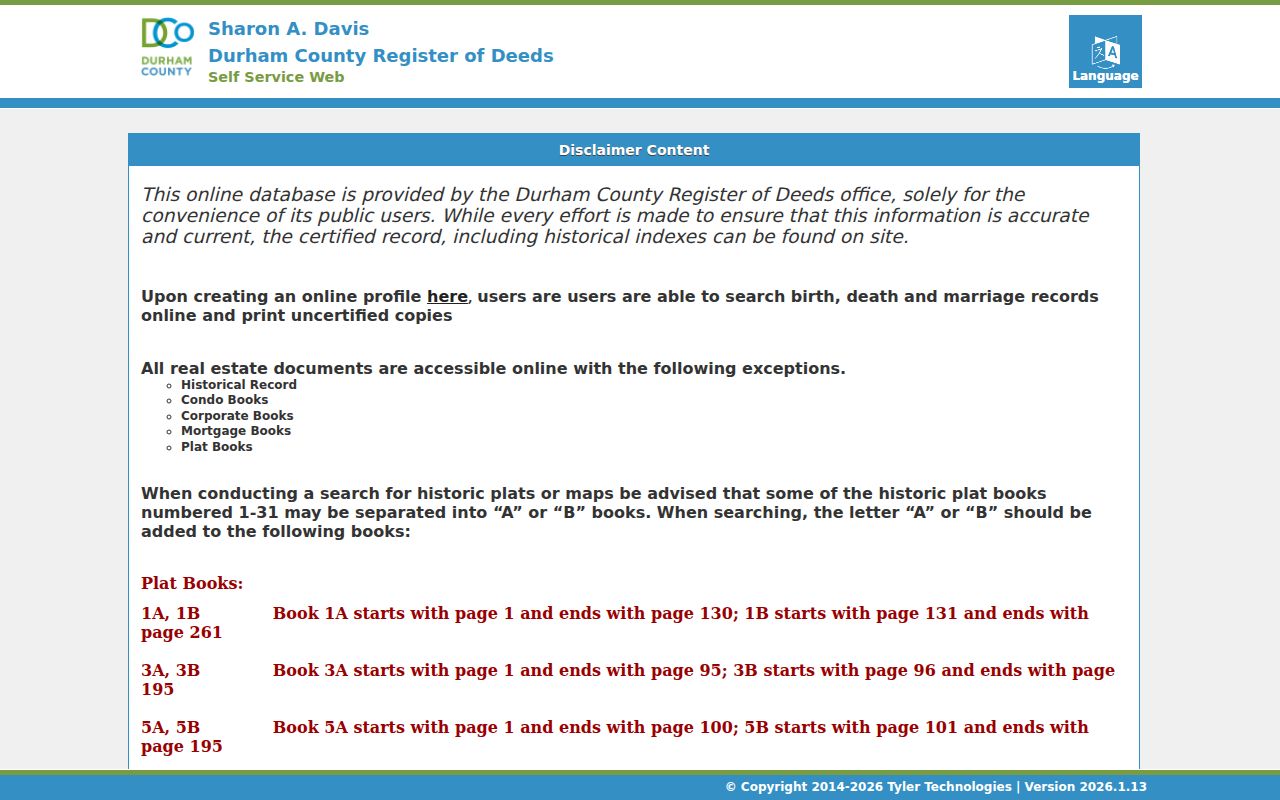
The distinction between an online index, an image, and an office-certified copy is crucial when a Durham deed or plat confirms a record trail.
Durham Permit Records by Address
The City-County Building Safety LDO system gives a different Durham address trail. Its public Parcel Search accepts permit number, parcel ID, parcel PIN, street number, street name, unit number, first name, last name, and company name. Address searching requires the street number and street name together. Most existing development applications, review comments, and inspection results for City and County parcels have public coverage since October 2007.
Durham jurisdiction needs checking before using a permit result. The county directs users to Find My Jurisdiction and then to tax data, because a Durham mailing address does not establish that the City or County issued the record. A result can name an applicant, owner, or contractor, none of which automatically proves household membership. Pre-2007 work may require older paper files, archives, or another department.
Durham Postal and Parcel Boundaries
Durham ZIP, city, and county labels overlap without matching. USPS controls delivery routing. Durham Maps supplies city limits, county boundaries, parcel geometry, historic layers, and planning context. Tax Administration identifies the parcel account. A Durham postal city may sit outside municipal limits or cross a county line, so pair the postal address with the city/county layer and the parcel jurisdiction.
The GIS viewer can show a boundary or nearby parcel, but it does not replace the legal description in a deed. The Mailing List Tool can buffer selected parcels and generate addresses for a geographic task. Its output is an address list, not a list of residents. Keep an original address spelling as well as the normalized database form.
Durham Public Records Requests
When a Durham record is not in a dedicated portal, North Carolina’s Public Records Act provides an access route to existing county records. Chapter 132 calls for inspection at reasonable times and copies as promptly as possible, subject to exceptions. It does not require an agency to create a new list, compile an analysis, or convert a record into a format it does not maintain. A narrow request names the office, record type, date range, available format, and index terms.
County NextRequest lets a requester search available material or submit one detailed request. County guidance says to avoid sensitive information in the request. City-held material uses the City’s own online route, not a phone request. Ask the actual custodian first, then use mail, phone, or an in-person counter when the record documents that channel.
Durham County’s request portal provides the county channel for an existing administrative record not exposed through a specialist search.
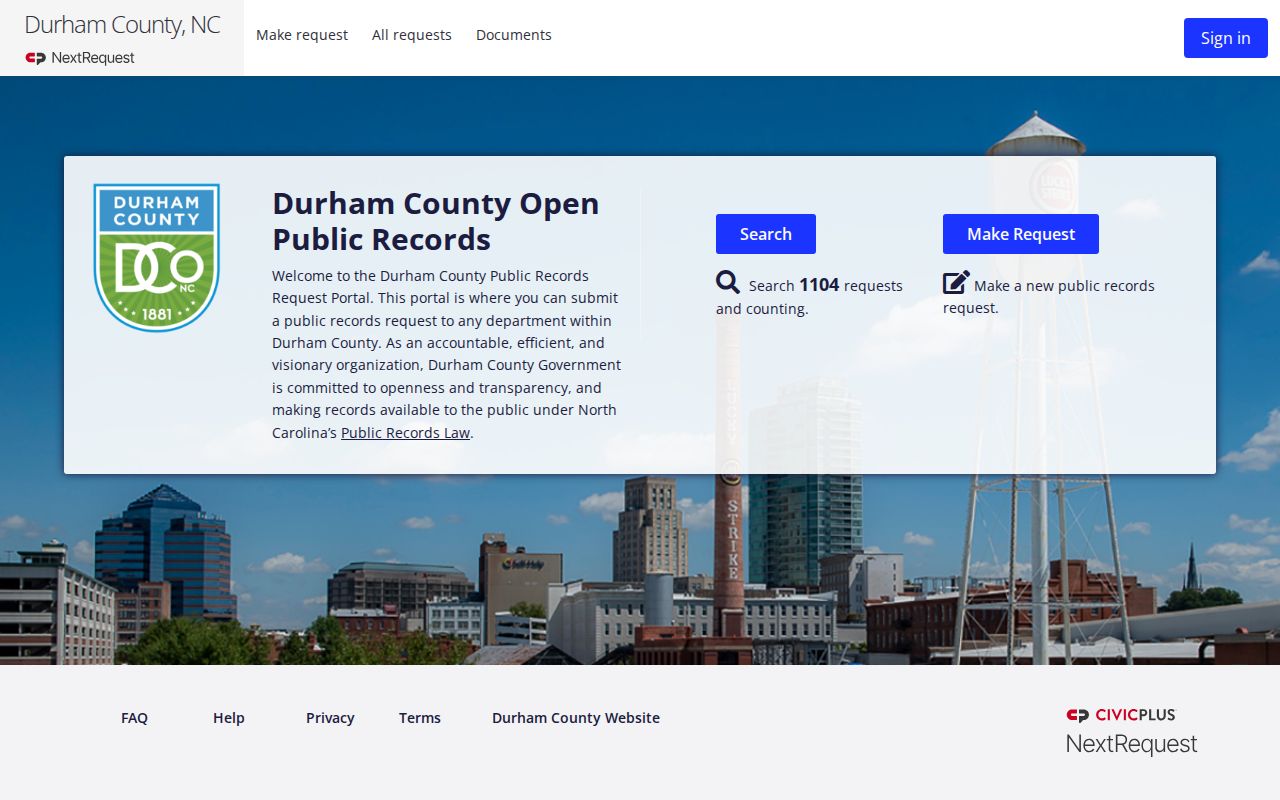
A focused request for an existing Durham record is more workable than asking a custodian to create a custom residents directory.
North Carolina General Statutes Chapter 132 is the state source for the public-record access framework.
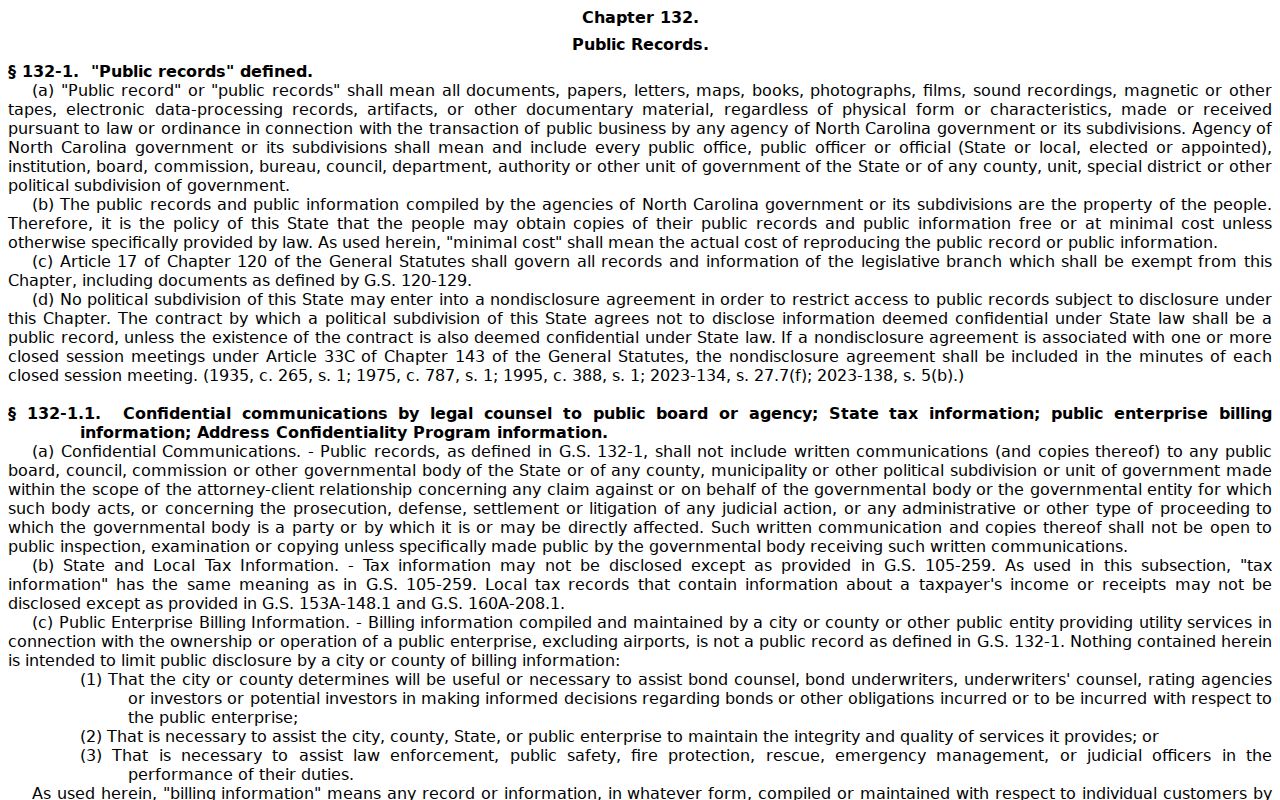
Chapter 132 access is subject to record-specific confidentiality rules, so the best request identifies both the Durham custodian and the exact material sought.
Durham Privacy and Address Protection
Public availability does not justify broad republication. Voter displays omit protected identifiers. Vital records have statutory eligibility rules for certified copies. Court portals exclude sealed and confidential material. Durham property tools show parcel and tax fields, not a complete household roster. The North Carolina Address Confidentiality Program can provide a substitute address for qualifying survivors of domestic violence, sexual assault, stalking, and human trafficking. An absent or substituted address can be an intentional safety control.
Keep the label attached to the record. An owner is not automatically an occupant. A voter registration is not a current-address guarantee. A deed party and a permit applicant have distinct roles. Correction, suppression, and safety questions should go to the agency that holds the record, not to a copied listing.
Durham Records Before Online Search
Durham County formed in 1881 from parts of Orange and Wake counties. A person, parcel, or event from before that date may belong in a predecessor county, an early city source, or a church and archive collection rather than a present-day Durham office. Register of Deeds conversion notes describe documents dating to the county’s beginning, but the current public portal does not state an exact cutoff for online real-estate images.
Durham’s growth also changed the meaning of an address. Urban renewal altered parts of Hayti and rerouted streets. The Walltown plan describes historic blocks with private alleys and small lots. A modern map, directory street section, recorded plat, and aerial layer can disagree without any one source being false. The date and physical geography explain the difference.
Historical Durham Resident Directories
The North Carolina Collection at Durham County Library separates surname sections from street-address sections, making it useful whether the starting point is a person or an old address. Annual print directories reach back to 1903, with late nineteenth-century material to 1892. DigitalNC makes Durham directory material from approximately 1875 through 1963 available online. Mangum’s Directory of Durham and Suburbs, telephone directories, and Greater Durham cross-reference directories add distinct address trails rather than one interchangeable record set.
The collection is on the third floor of the Main Library at 300 N. Roxboro Street. It also holds local history, yearbooks, Herald-Sun microfilm, genealogy resources, and guidance to outside collections. Confirm a specific year, condition, and reproduction option before traveling. A historical entry anchors a person or address to that edition only. The Durham city directory collection route examines those dated volumes in depth.
Note: Cross-reference and telephone books can connect a phone or street to a period, but their date and coverage never establish a present household.
Durham Vital and Cemetery Routes
For a specific civil event, Durham’s Register of Deeds issues local certified birth, death, and marriage copies, while North Carolina Vital Records provides statewide certificate routes. Divorce copies come from the Clerk of Superior Court in the county where the divorce was filed. Certified copies are limited by state eligibility rules, and parent addresses and Social Security numbers are protected. These are request routes, not a free name-search substitute.
City cemetery records supply another dated person-to-place trail. Durham manages Maplewood and Beechwood cemeteries, and burial information is described as public under state law through the cemetery system. An interment record can establish burial context, not a current Durham residence. Use the office or system associated with the actual record and preserve its date.
North Carolina Vital Records shows the statewide ordering route for eligible certificate requests.
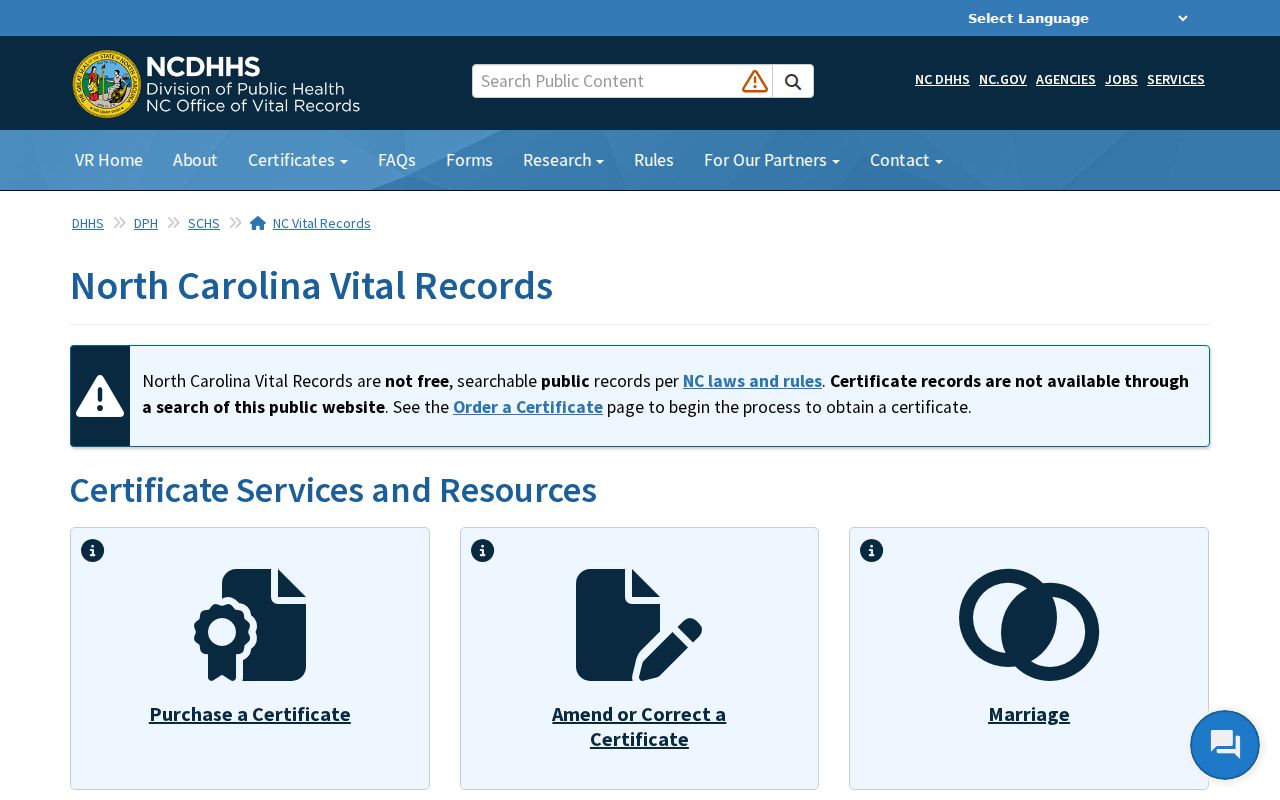
The state route complements Durham’s local Register of Deeds counter when an event or certificate request falls outside the county’s practical scope.