
Durham Previous Residents by Era
A Durham address history is a chain of dated sources, not a continuous roster. A deed tracks legal parties to a transfer. A parcel card provides current tax and reference fields. A directory can place a householder, person, business, or telephone listing at an address for one edition. Each source can be valuable for previous residents when its limits stay visible. Begin with the source nearest the period you need, then compare the name, address form, parcel description, and date across the next source.
| Source | Years it covers | Where held | What it can show |
|---|---|---|---|
| Durham ROD record context | 1881-present project history; exact online cutoff not stated | Online for most series; historical and certified records onsite | Recorded deeds, plats, legal parties, and references |
| Durham city and county directories | Late 1800s-present collection; annual print back to 1903 | Durham County Library North Carolina Collection | Alphabetical and street-address snapshots |
| DigitalNC Durham directories | Approximately 1875-1963 | Online digitized collection | Visual or searchable historic editions |
| Telephone directories | 1927 and 1950-2016 | Library collection | Historical phone and address clues |
| Greater Durham cross-reference directories | 1962-present | Library collection | Telephone and street-address information |
These coverage ranges describe collection holdings, not a promise that every year is complete or searchable. The historical collections can supply a household lead. The Register of Deeds and the Clerk are separate paths for an official deed or estate record. A missing entry should be logged as a gap, not turned into a conclusion about a past resident.
Durham Parcel Records Start the Trail
Use Durham County Tax Administration Detailed Property Information to anchor a present parcel before following previous residents. The public portal accepts owner or business name, street, REID, and PIN. A street search asks users to omit street type and direction from the Street Name field. Save the REID, PIN, location or situs address, property description, deed book and page, plat book and page, acreage, planning jurisdiction, and city fields before moving to the deed record.
The property card separates an owner display, owner mailing address, and location address. Those fields can match on a sample card, but they remain distinct. A mailing address is not proof that an owner lived at the parcel, and a tax display does not change the recorded deed name. Tax Administration directs deed-name questions to the Register of Deeds, which holds the legal instrument and legal description.
Note: Keep the original address and the normalized tax search form together because an older directory or deed may use a different street form.
Durham Previous Residents Through Deeds
The Durham Register of Deeds public search route is the next step when the parcel card supplies a deed reference. A current deed can lead backward because the party who transferred the property may appear as the buyer in an earlier transaction. This is a legal-party trail, not a direct occupancy list. Compare legal descriptions and plat references as well as the street address, particularly where a lot was split, an easement was recorded, or an address changed form.
- Record the current parcel’s REID, PIN, legal description, owner display, and deed book or page reference.
- Open the recorded instrument or ask the Register of Deeds for an image or certified copy.
- Capture its grantor, grantee, instrument type, recording date, book or page, and prior-instrument reference when shown.
- Search the earlier party and follow the prior reference backward, preserving the date and legal description at each link.
- Use the plat and Durham Maps geometry to distinguish the intended lot from a tract, condominium, easement, or right-of-way.
- Grantor
- The party transferring or executing an instrument.
- Grantee
- The party receiving an interest named in an instrument.
- Chain of title
- The sequence of recorded transfers used to trace a parcel backward.
- Legal description
- The tract or lot language in the recorded instrument. It can be more stable than a street address in older records.
Durham Deed Books Beyond the Web
Durham’s online real-estate materials do not make every historic book series available on the web. The Register of Deeds disclaimer specifically excludes the Historical Record, Condo Books, Corporate Books, Mortgage Books, and Plat Books from the broad statement that real-estate documents are online. The historical plat list also uses lettered ranges such as 1A/1B, 3A/3B, 5A/5B, 6A/6B, 18A, 28A/28B, and 31A/31B. The public portal does not state a precise current cutoff for online real-estate coverage.
When an image is absent, use the office’s historical indexes or request a certified record rather than treating the gap as proof that no deed exists. Durham’s Register of Deeds is at 201 E. Main Street, Administration Building II. General hours are 8:30 a.m. to 5 p.m., while real-estate recording ends at 4:45 p.m. The office also publishes phone and email routes for copy and jurisdiction questions.
The ROD public-record search route image shows the online access path and historical-index guidance.
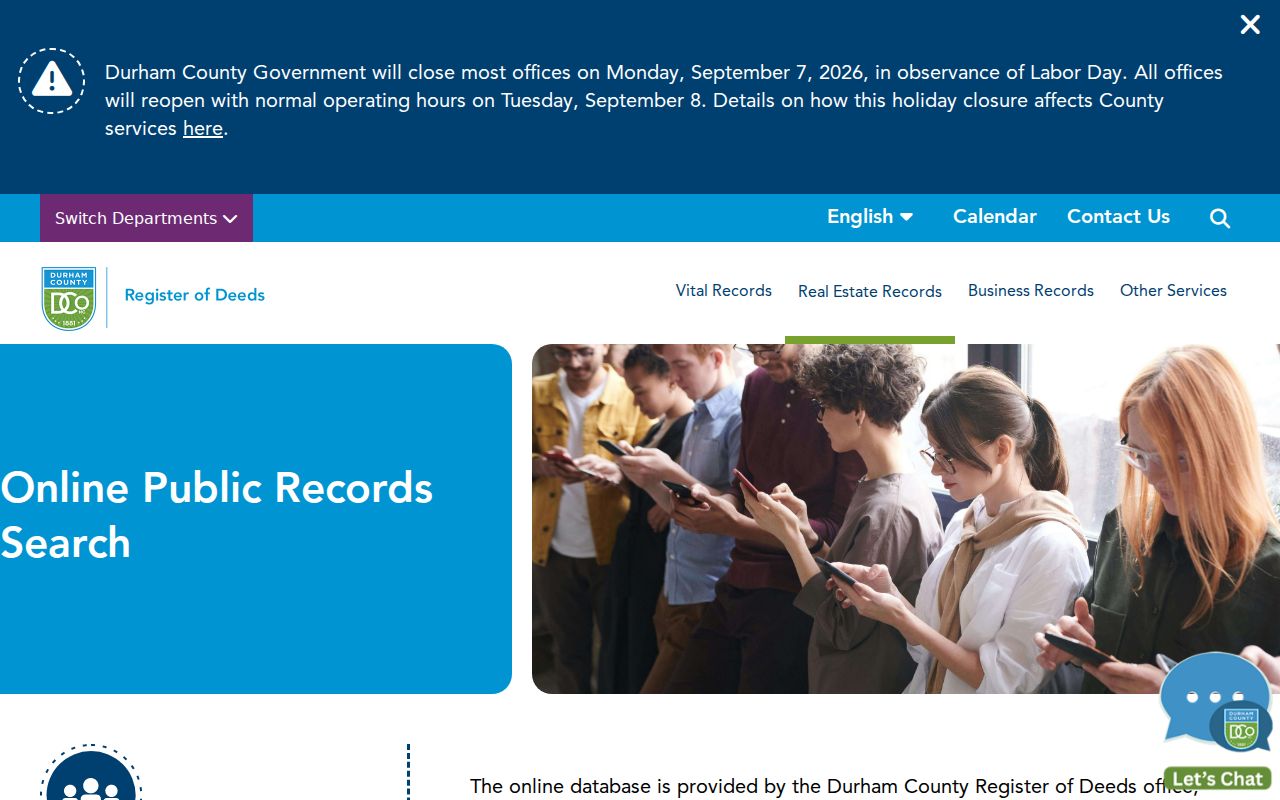
The access route is an index and image path where available, with office-held historical records filling documented online gaps.
Durham Previous Residents in Street Editions
The Durham County Library North Carolina Collection treats directories as annual snapshots of residents and businesses. Their alphabetical surname section and street-address section answer different questions. For past residents, start with the street section for the exact edition, then check the surname section for the same year and nearby editions. Mangum’s Directory of Durham and Suburbs is useful where the place sat outside the city limits, while the cross-reference run can add a telephone and street-address clue for later periods.
Directory entries are time-stamped listings, not proof of a complete household or a lasting residence. A street section can omit people or use householder conventions. A telephone number is historic and can be reassigned. The detailed collection path belongs with the Durham city directory; use it here as a dated household clue alongside a deed and parcel description.
Note: Record the edition year with every directory result, because a historical listing is not a statement about the address today.
Durham Household Snapshots Over Time
Ownership and household evidence should be kept in parallel. A practical sequence is address form, directory street section, surname check, deed period, and the census resource that brackets the directory edition. Use the holding library to confirm which census tools or copies are available for the period. That flow can reveal a gap, a renamed street, a business listing, or an address that needs a legal-description check before another name is added to the history.
- Preserve the historic address spelling from the directory or document.
- Find the same or normalized address in a dated street section.
- Check the surname section and a nearby edition for continuity or a change.
- Pair the edition with the available census research for its period.
- Compare the household clue with the parcel’s deed and plat references, without equating an owner with every listed person.
Durham County Library’s North Carolina Collection is on the Main Library’s third floor, 300 N. Roxboro Street. The collection lists directories, Herald-Sun microfilm, old yearbooks, genealogy resources, local history, and reproduction planning. Contact the library in advance to ask about a particular year, page condition, microfilm availability, and reproduction rules.
Durham Lots, Alleys, and Walltown
Some address histories need a map and plan before the directory and deed entries line up. The Walltown Small Area Plan explains that George Wall, a former Trinity College custodian, bought the plot at what is now 1015 Onslow Street. The plan describes a predominantly Black working-class neighborhood connected with tobacco and textile work, with blocks of about 24 lots, lots roughly 50 by 140 feet, and private 20-foot alleys. Much of the street grid remains.
That physical context is a research aid, not an occupancy claim. A rear-lot or alley reference can explain why a modern map, street directory, and recorded plat seem inconsistent. Compare the plan, historic directory street section, deed or plat, and current aerial or parcel layer before drawing an address conclusion. The plan was adopted August 18, 2025, making it a current planning source with historical detail.
Durham Previous Residents and Office Copies
The Register of Deeds separates an online index, a document image, a certified copy, and an e-recording status. E-recording is for approved submitters, not a general historical search. Its fee schedule distinguishes general instruments, deeds of trust or mortgages, plats, UCC searches, and certified vital copies. Confirm the current schedule before sending payment, because an index result and a copy request have different costs and purposes.
For estate context, the Durham Clerk of Superior Court handles estates and probate. Estate files can include decedent, beneficiary, heir, asset, real-estate, deed, and tax-printout references. They are not a substitute for a deed chain, but they can explain a transfer in an address timeline. Court copies and certifications should be checked with the Clerk.
The Durham ROD fee schedule capture distinguishes the office’s recorded-document and copy routes.
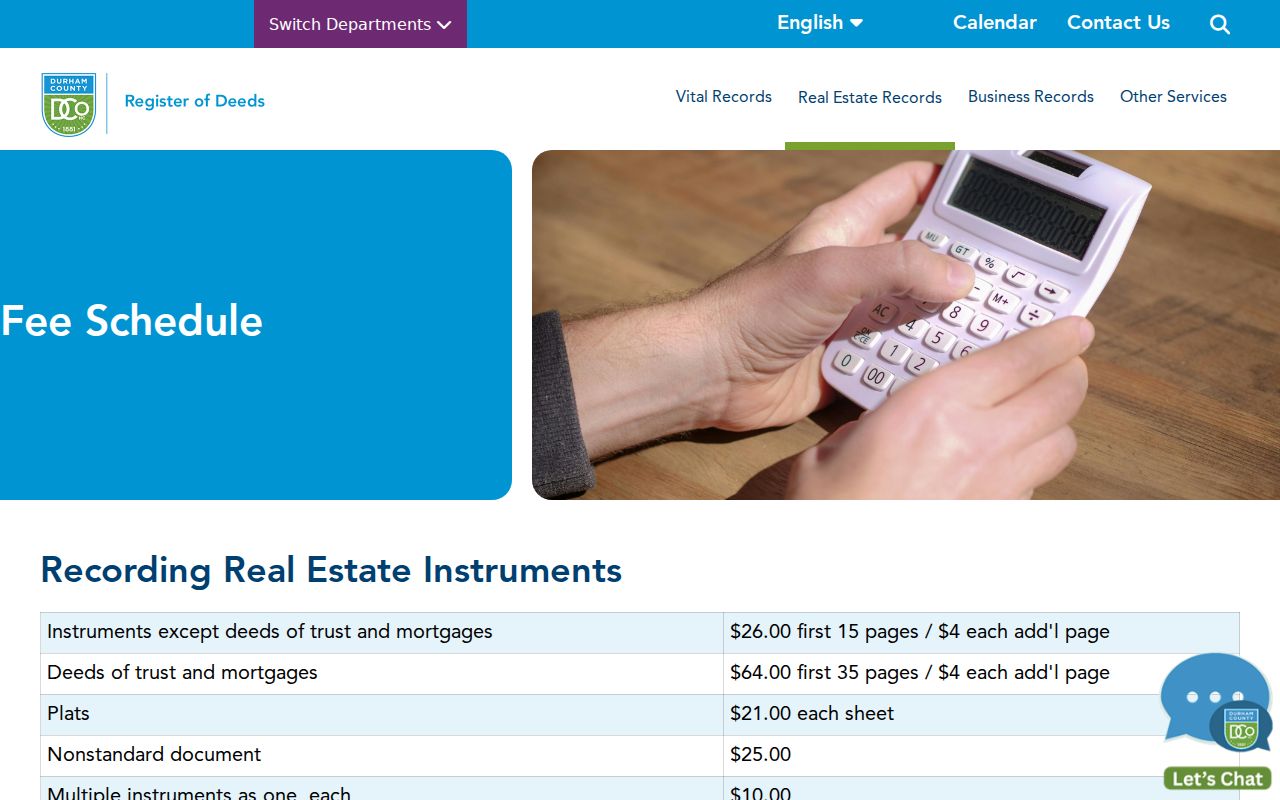
The fee information is useful when a portal result needs an official document or an onsite historical-index follow-up.
Durham Previous Residents at Local Collections
For older local material, Durham offers more than a browser search. The Register of Deeds genealogy workstation is onsite, uses assigned computers, requires a username and password before searching, and charges $0.10 per photocopied page. The Main Library collection and its external-resource guide broaden the trail to DigitalNC, Durham County Papers, yearbooks, photographs, Duke, UNC, and NCCU holdings. Ask the holding institution for its finding aid and access rules rather than assuming every record is digitized.
Durham County Papers cover the 1870s through 1996 and include organizations, activism, institutions, and public life. The Durham Herald Company photo collection covers approximately 1945 through 2002. Those materials can add local context around an address or name, but their access and item-level indexing vary. They should support a dated record trail, not replace it.
The Durham ROD genealogy-search page documents the onsite research workflow.
The workstation is an office access channel for historic vital research, distinct from an open web directory search.
Durham Previous Residents: Trail Endpoints
Obituaries, probate files, newspapers, and burial records can provide a final date or person-to-place lead after the address trail has been established. Durham’s Beechwood and Maplewood cemetery management says burial information is public under North Carolina public-records law and directs inquiries to Discover Ever After. Maplewood was established in 1872, and Beechwood in 1924. A burial record is not a residence record, so it should be labeled as an interment source rather than proof that a person lived nearby.
Use the address history for family research, estate and heir questions, or local history. Do not use names or addresses to track, harass, or harm a living person. A suppressed or missing address may be a safety measure, including an Address Confidentiality Program protection. Keep the record role clear: owner, grantor, grantee, directory listing, heir, and burial entry are not interchangeable labels.
The Durham cemetery information image shows the city’s burial-information route.
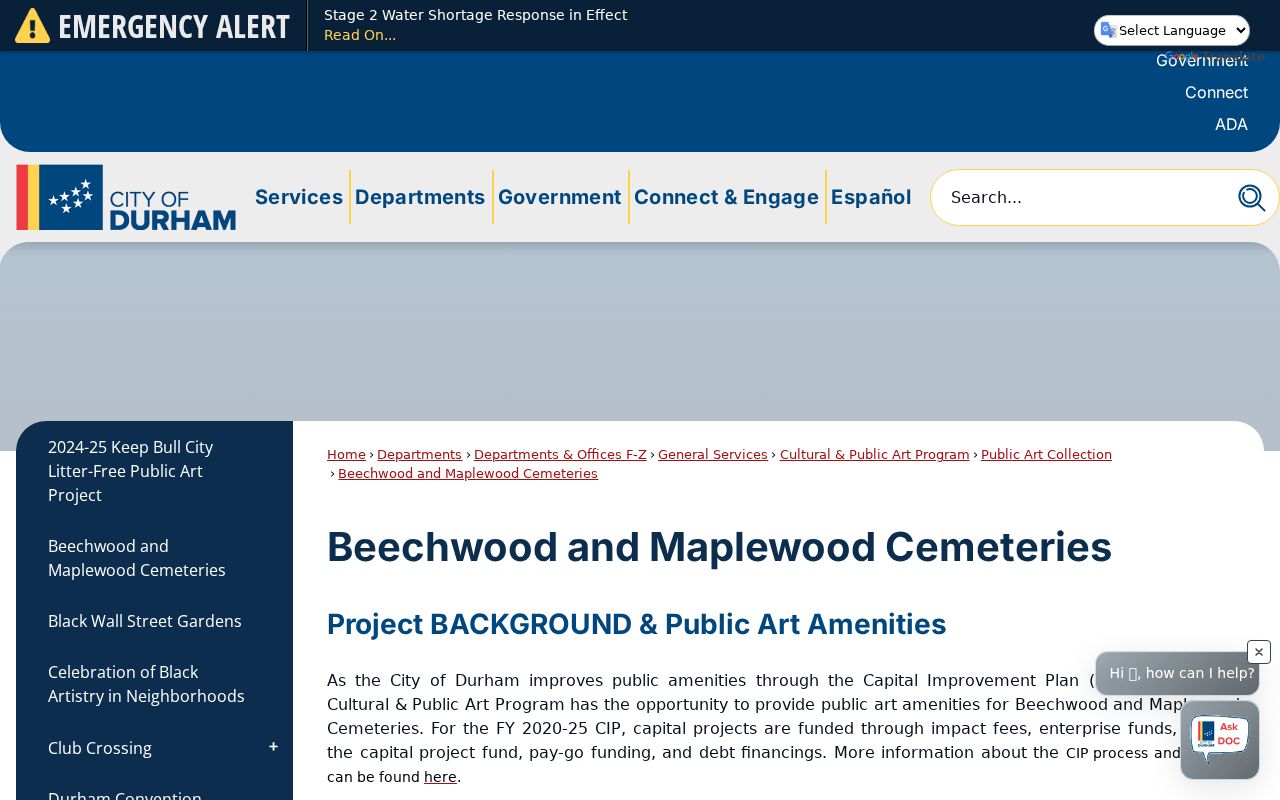
Use this person-to-place source as a dated endpoint or context record, never as a claim of past household occupancy.
Lawful use. Durham house-history research is for family history, estate matters, and personal curiosity. Do not use public records to stalk, harass, or harm any person.