
Durham Resident Lookup Records
A single name does not have one Durham record. The best starting point depends on the question. Registration information can help distinguish a name in a jurisdiction. A court entry places a named party in a public case context. A parcel card concerns tax ownership, while a deed identifies recorded instrument parties. Historical directories are dated snapshots, and vital certificates have their own statutory eligibility rules. Read each result as evidence of its stated role, not as proof of every fact about a person.
| Record | What It Confirms | Where | Access |
|---|---|---|---|
| Voter registration | Registration, jurisdiction, polling context, and status/history fields | NCSBE Voter Search | Name, birth year, county, and status search; protected fields omitted |
| Court docket | Named party role, case context, dates, and docket events | NC eCourts Portal; Durham Clerk | Public case types only; Portal is not the official record |
| Tax parcel | Tax ownership display and parcel relationship | Durham Tax Administration | Owner, mailing, and situs fields can differ |
| Recorded deed | Instrument parties and legal description | Durham Register of Deeds | Images vary by series; historical books and certified records are in person |
| Historical directory | Edition-specific person, address, or business listing | Durham County Library and DigitalNC | Incomplete years are possible; it is not a current register |
| Vital certificate | A specific civil event under eligibility rules | Durham ROD or NC Vital Records | Certificate route, fees, and relationship rules apply |
Begin with a non-sensitive disambiguator, such as a middle initial, an approximate age, a known municipality, or a historical year. Keep a record of the custodian, URL, date checked, field used, and what the result actually says. A second independent record is especially important for common names.
Durham Voter Lookup Fields
The North Carolina State Board of Elections Voter Search is a useful first screen when the question is whether a named person has a registration record connected to Durham County. It requires first name, last name, year of birth, county, and voter status. Middle initial is optional. Search both relevant status choices when appropriate, because the absence of one result does not prove that a person never lived in Durham. The public display can include jurisdictions, polling place, a sample ballot when available, absentee information, and voter history.
| Search Field | Requirement or Option |
|---|---|
| First Name | Required text field |
| Last Name | Required text field |
| Middle Initial | Optional text field for distinguishing similar names |
| Year of Birth | Selection field used with the name |
| County | Selection field; choose Durham County for this search |
| Voter Status | Registered and Removed or Denied options; select at least one |
Under G.S. 163-82.10 and Chapter 132, much registration information is public, while Social Security numbers, full birth dates, driver-license numbers, and the agency of registration are excluded. A voter record is registration evidence, not a promise of current occupancy. Durham County's public-information route also has request forms and historical export categories, but those records should not be used to imply a current physical address.
Use the official North Carolina voter search for the required fields.
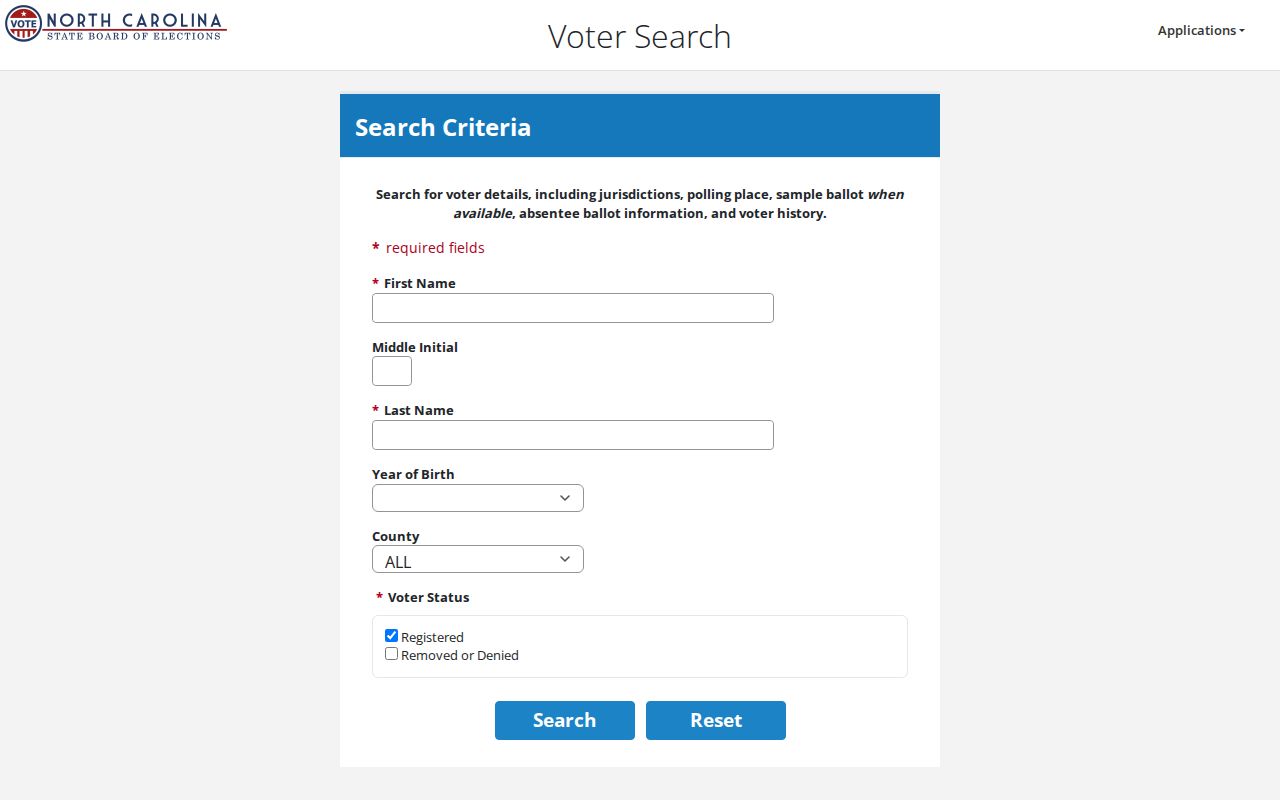
The form shows why a year and county are better identity checks than relying on a name alone.
Reading Durham Court Party Roles
NC eCourts is the statewide Odyssey portal for Durham court research. Smart Search can be used without an account, while a registered account can save My Cases. Start with the Durham location and a narrow name or date window. The portal separates party criteria from case criteria, hearing search, and judgment search. A common name without a date of birth or another disambiguator is not identity proof, and a portal display is not the official court record.
| Search Area | Durham eCourts Fields | Useful Limit |
|---|---|---|
| General options | Location | Use the correct county or jurisdiction |
| Party criteria | Party name, nickname, sounds-like, business name, DOB range, gender, ethnicity, FBI number, SO number | Last name needs at least three characters before a wildcard |
| Case criteria | Case type, status, file-date start and end | Use a narrow date window for a common name |
| Hearing search | Case number, party or business name, attorney/bar number, judicial officer, courtroom | Identify the record type before reading the party role |
| Judgment search | Party name or case number, case type, status, location, date | Results can show case number, parties, status, index date, and comments |
Read the named role with the case type. A party can be a plaintiff, defendant, petitioner, respondent, decedent, attorney, or another displayed role. Public case types may show Case Summary, assignment, party information, events, hearings, dispositions, or financial information. Sealed and confidential matters are not a gap to work around. For an official copy or a paper file, contact the Durham County Clerk of Superior Court.
Note: The case-number pattern has four parts, and the portal requires at least four characters before a case-number wildcard is accepted.
Verifying a Durham Resident
Verification means anchoring a name to a source and then asking a second source a different question. First separate the person from same-name results. Next use the official court search only for public case context, and use the tax portal only if the question is ownership. A property owner can have a mailing address different from the situs address, and neither field alone proves occupancy. For a historical person, a library directory and its street section can supply an edition-specific starting point before a deed, newspaper, cemetery record, or institutional collection is consulted.
- Normalize the name and record a middle initial, approximate age, known municipality, or historical year without collecting unnecessary personal data.
- Search the voter lookup by first name, last name, year of birth, Durham County, and the relevant status choices. Treat a match as registration evidence.
- Search eCourts with Durham selected, then compare case type, date range, and party role before linking a result to the name.
- When ownership is the question, compare the Durham tax owner display with mailing and situs fields, then use the deed reference for the recorded instrument route.
- Write down source, custodian, record date, access date, and confidence. Ask the custodian for a certified or official copy only when that specific record is needed.
- Docket
- A court's list of case events and actions. It is an index to the case activity, not automatically the official document.
- Index versus image
- An index points to a record or record fields; an image is the displayed document or page. Access can differ by series.
- Certified copy
- A copy issued by the custodian with the certification required for an official record purpose; it is different from a portal display.
When the record matters beyond a preliminary Durham lookup, preserve the result fields first and ask the named custodian which copy or certification route applies.
Durham Resident Lookup Result Fields
When a Durham resident lookup reaches a public court result, copy the record structure rather than a loose conclusion. The official training materials describe fields that can be present in a public result. These fields make it possible to tell one party from another and to preserve the context needed for a later Clerk request. They do not turn a docket entry into a biography.
- County, case number, case type, status, and file date: the jurisdiction and time frame for the displayed matter.
- Party name and role: whether the displayed person is a defendant, plaintiff, petitioner, respondent, decedent, attorney, or another role.
- Assignment and causes of action: displayed courtroom, judicial officer, or public category information.
- Events, hearings, and disposition: dated register-of-actions entries and any shown outcome field.
- Document indicator: whether the portal shows availability, while the Clerk remains the official-copy route.
Durham courthouse public terminals can search judgments, civil, criminal, and estate records. The Clerk can help with file location and copies; paper files remain with the county where the case is located. A certified single-county criminal name search uses AOC-CR-314 and is listed at $25 for mail requests, while a noncertified county or statewide search at courthouse computers is free, with possible printing cost.
Durham Vital Record Orders
Vital records are for a defined certificate request, not an open name-search tool. Durham County Register of Deeds is the local issuing office for eligible Durham records, while North Carolina Vital Records is the statewide office. Durham ROD can issue certified North Carolina birth copies for qualifying applicants born in North Carolina from 1971 to the present, subject to eligibility. It provides death copies in person, by mail, or online. Marriage certificates are requested after the event, and divorce judgment copies come from the Clerk where the divorce was filed.
G.S. 130A-93 and G.S. 130A-99 govern inspection, copies, and certified-copy eligibility. Copies or abstracts of most vital records have statutory access rules, while certified copies are limited to eligible relationships, legal determinations, or authorized agents. Parent addresses and Social Security numbers are protected. State marriage records are listed from 1962 to the present and state divorce records from 1958 to the present. Durham's listed certified birth, death, and marriage copy fee is $10; state search and certificate fees have separate rules.
Review the North Carolina Vital Records order route before choosing a certificate type.
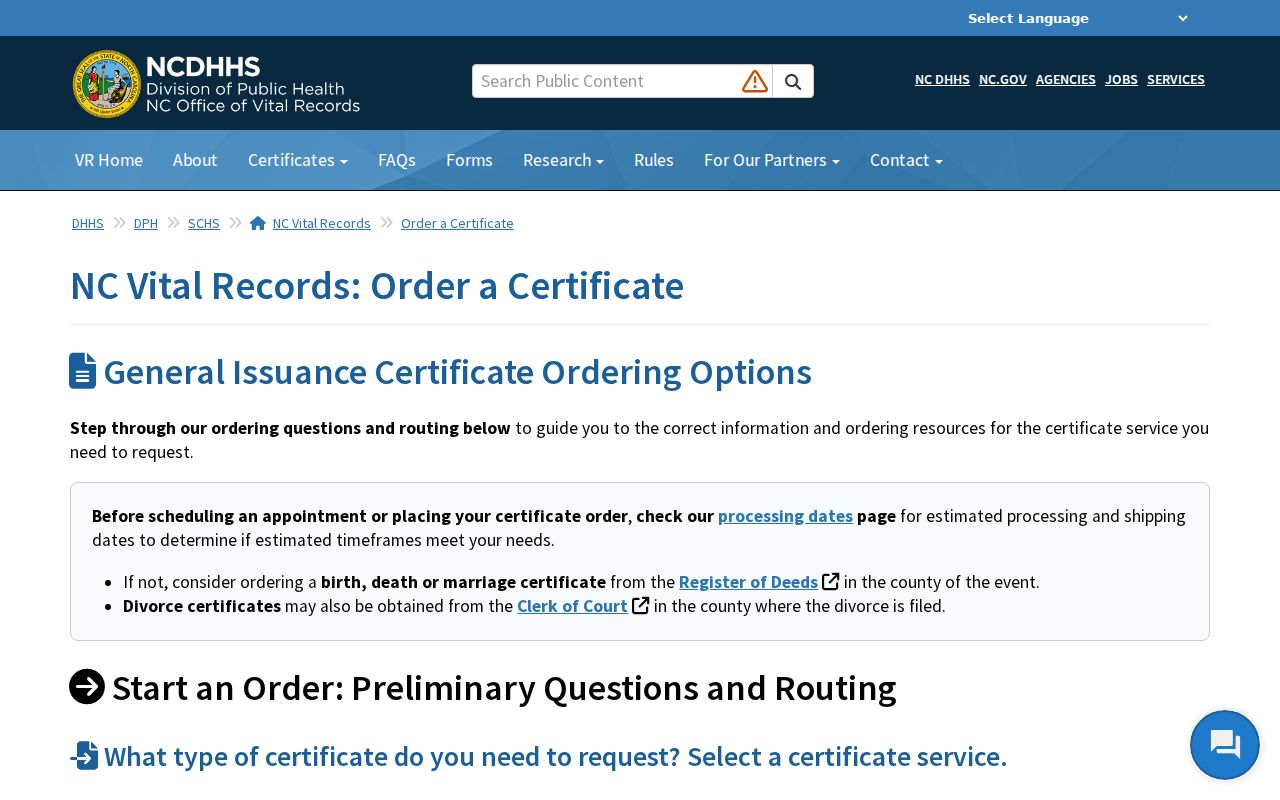
The order screen emphasizes that a request needs the right record type, relationship information, identification, and payment path.
Durham Records Have Different Roles
Do not merge labels from unrelated Durham sources. An owner is the name shown in a tax or deed record. A registered voter is connected to a registration record. A party is named in a court matter. A licensee is connected to a board record, while a business agent is linked to an entity filing. A permit applicant or contractor is attached to a project, and a burial record documents an interment. Each label describes a record role, not a universal identity category or a current address.
For business and professional questions, use the North Carolina Secretary of State business registration search or the appropriate licensing board. A business address can be a registered office. For historical people, compare Durham directories, yearbooks, Herald-Sun microfilm, cemetery material, recorded deeds, court indexes, and Duke, UNC, or NCCU collections. Sources that agree on a date and role are stronger than a long list of unrelated name matches.
Note: A Durham record can identify a role on a stated date without confirming a person's current address, household, or status.
Durham Resident Lookup Limits
The North Carolina Public Records Act provides inspection and copy rules for existing records, but Chapter 132 does not require an agency to create a new compilation or answer a question from records it does not maintain. A court portal excludes sealed and confidential material. Property data is not a complete occupant list. A voter record does not expose protected personal fields, and vital certificates have statute-based eligibility. Use the custodian's dedicated process first, then a written request for an existing administrative record that is not in a dedicated tool.
North Carolina's Address Confidentiality Program can also explain an absent or substitute address. It serves qualifying survivors of domestic violence, sexual assault, stalking, and human trafficking through a substitute address for first-class mail and public-record use. The actual address is not shared except as authorized by statute or court order. A missing address can be a safety measure, not evidence that the person is absent from Durham. Route correction, suppression, or safety questions to the source custodian.
See the North Carolina Address Confidentiality Program for its official safety and application information.
Durham Custody and Registry Sources
Custody and registry systems are separate from a resident lookup. The Durham County Sheriff's inmate population search is the local current-custody route. The North Carolina Department of Adult Correction search is a statewide custody route, and the NC SBI Sex Offender Registry is a separate statutory registry. They answer different questions. A result should be labeled by source, date checked, and jurisdiction. A result is not a complete biography, and a no-result is not proof that no record exists.
Use the North Carolina Department of Adult Correction search only for its state custody scope.
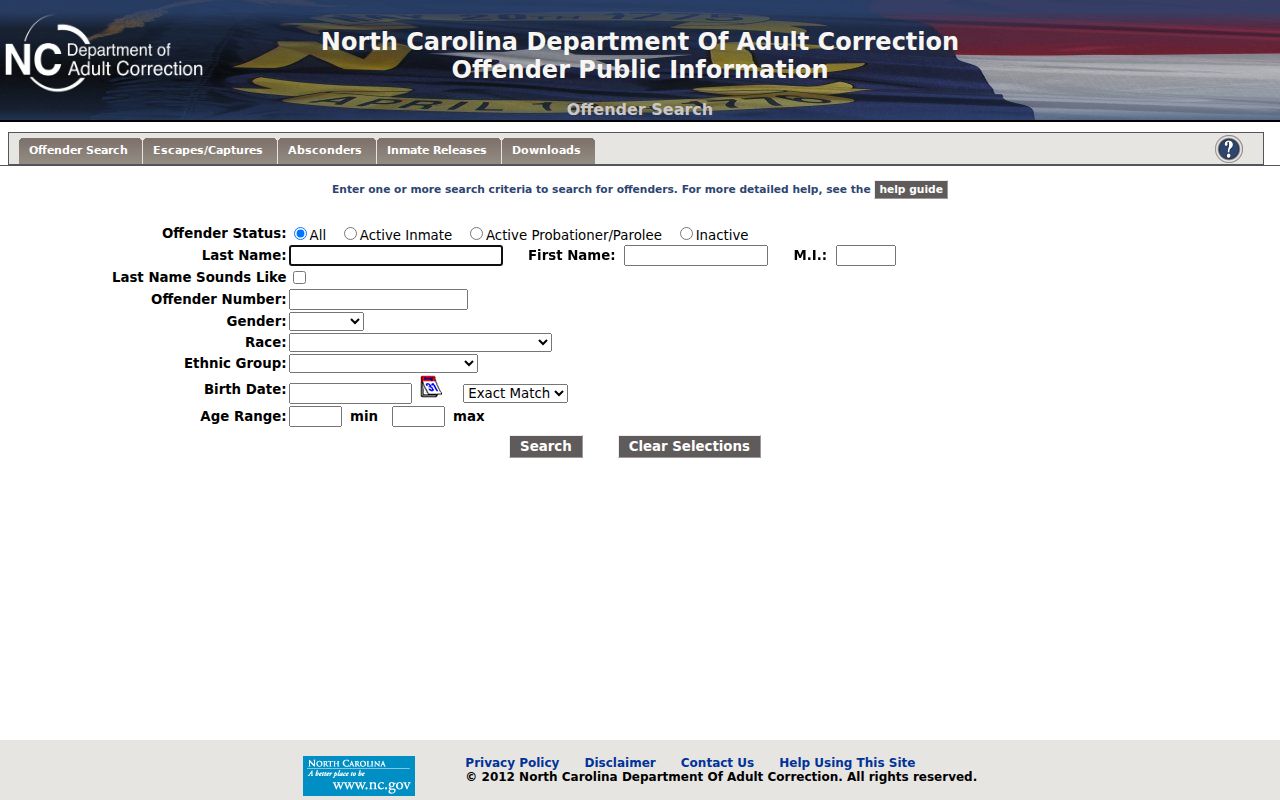
The state search is a distinct custody source, not evidence that a person lives in Durham or a substitute for a local booking record.
Use the North Carolina Sex Offender Registry for its separate statutory search and map or list interface.
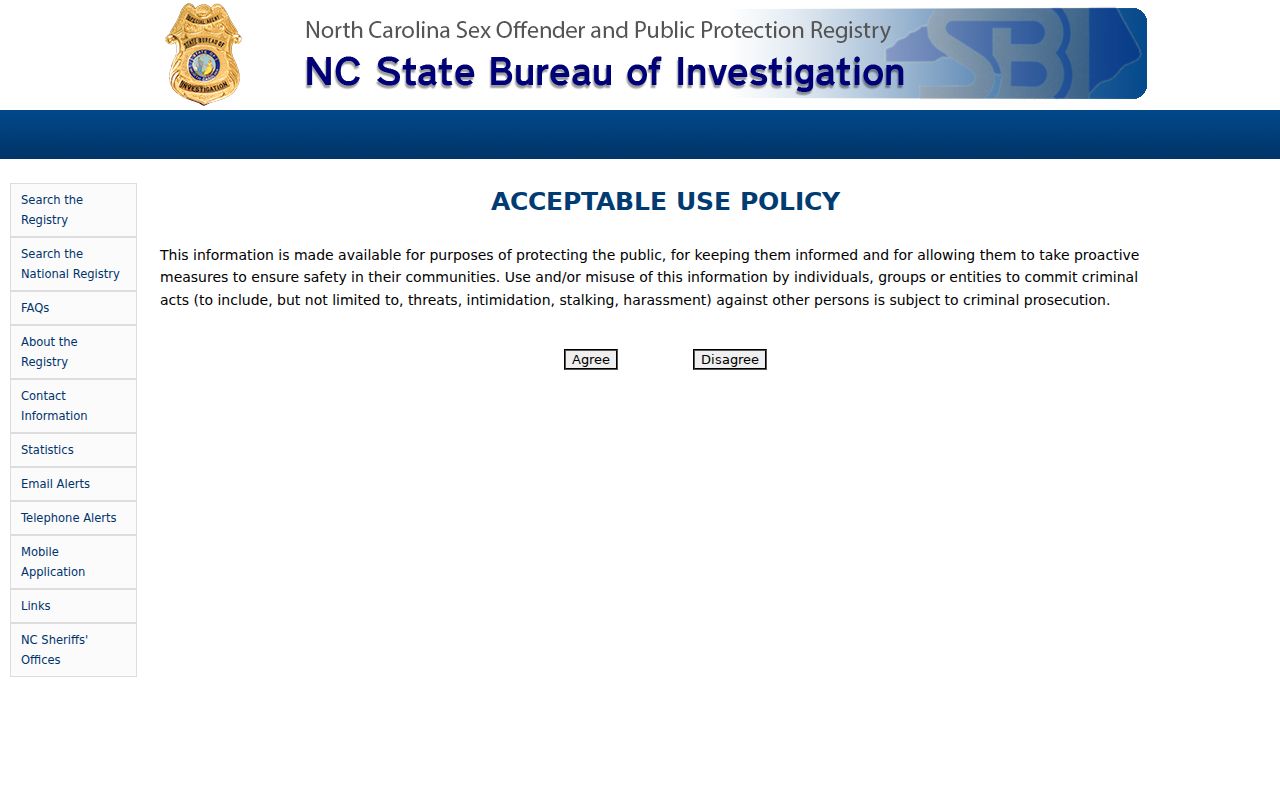
Registry information must retain its source and statutory context. Do not use it to create a generalized claim about a person, household, or neighborhood.